
10 mins
W4
2026/4/18 19:40
萬座曉劇場
Wan Theater
徑
Kinetic Potentials

關於呼吸、力量與節奏的身體實驗
《徑》從編舞家過去在體育班的訓練記憶出發,思考身體如何在結構、技巧與呼吸之中釋放能量。在編舞家的理解中,體育訓練並非單純依靠力量,而是建立在清楚的方法、結構與技巧之上。無論是短跑時的重心前傾與終點壓線,或是撐竿跳中對角度與時機的判斷,這些經驗都讓身體學會在適當的時刻釋放能量。
進入舞蹈訓練後,身體開始面對另一種狀態:動作需要隨著音樂、節奏與質地不斷轉換。本次創作重新喚回體育訓練的身體思維,嘗試在舞蹈之中建立一種不依賴蠻力的方法,讓爆發力不只是外顯的大動作,而是透過呼吸調節、重心配置與感知累積由內而外逐步擴散。
同時,編舞家也回溯運動訓練中對自身狀態的高度感知。在高強度運動中,運動員必須透過調整呼吸節奏,使身體維持在可持續運作的臨界點。對應至本次創作,作品嘗試從呼吸出發,主動影響表演狀態,打破過往由動作主導呼吸的慣性,讓舞者在動作進行的同時,持續回到對自身狀態的覺察。
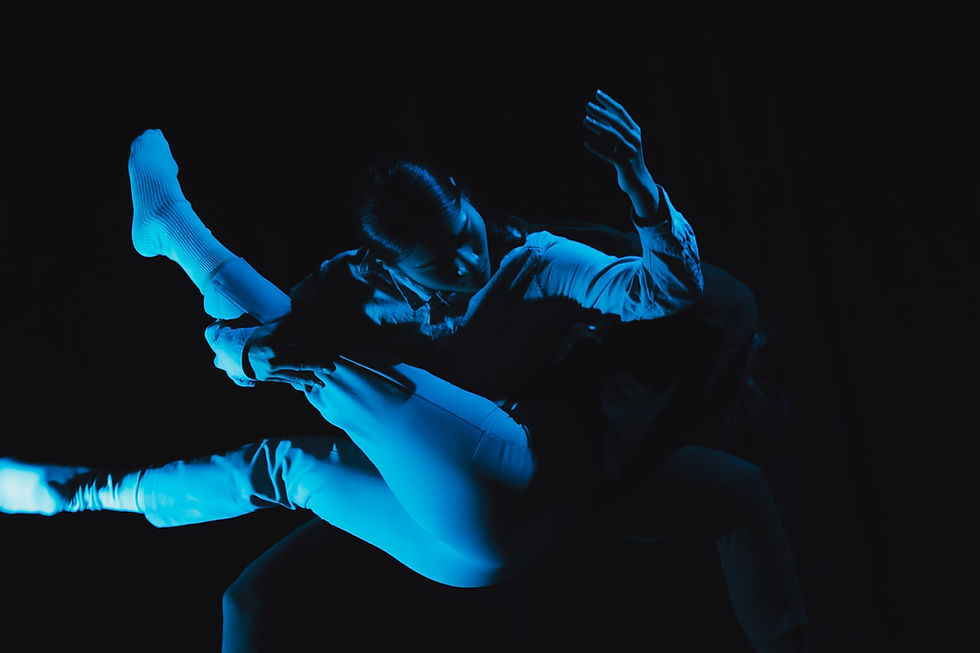
這樣的感知也延伸至雙人關係。兩個身體如同不同項目的運動員,在速度與耐力的差異中交錯前進,彼此即時感知對方的重心與距離,在靠近與分離之間不斷調整,維持動作的流動與平衡。
在演出形式上,作品保留即興聲音的介入。聲音不作為動作的前提,而是回應身體與呼吸狀態的元素,讓作品在既有的結構之中,能持續於現場延展新的節奏。
A Physical Experiment on Breath, Power, and Rhythm
"Kinetic Potentials" originates from the choreographer’s visceral memories of her training in specialized athletic programs growing up. It explores how the body releases energy within the interplay of structure, technique, and breath. The choreographer posits that athletic training is not merely about raw power: it is built upon precise methods, structures, and techniques. Whether it is the forward shift of gravity during a sprint, the final lean at the finish line, or the split-second judgment of angles and timing in pole vaulting, these experiences teach the body how to release energy effectively at the opportune moment.
As the choreographer transitioned into dance training, the body encountered a different state. Her movements now must instead constantly adapt to music, rhythm, and texture. This production reclaims the physical mindset of athletic training, seeking to establish a method in dance that does not rely on brute force. It redefines explosive power not as outward, grand gestures, but as an internal expansion fueled by breath regulation, gravitational alignment, and the accumulation of knowledge in the sense of self.
The choreographer also revisits the heightened self-awareness inherent in
athletic training. During high-intensity exertions, athletes must regulate their
breathing patterns to maintain the body at a sustainable tipping point. In this work, the creative process starts from the breath, allowing it to actively influence the performance state. This breaks the usual habit of movement-led breathing, enabling dancers to remain acutely aware of their physical state while in motion.
This idea extends into the partnering relationship within the production. Two bodies, like athletes from different disciplines, intersect through their variations in speed and endurance. They must sense each other’s gravity and distance in real-time as their bodies switch between closeness and separation to maintain flow and equilibrium.
In regard to the performance format, the work embraces the intervention of improvisational sounds. Rather than acting as a cue for movement, the sounds serve as an element that responds to the state of the body and breath. This allows the piece to maintain its organic nature, extending and generating new rhythms live within its established structure.
君舞蹈劇場
Chun Dance
君舞蹈劇場由藝術總監謝宜君於 2012 年創立,致力培育桃園在地年輕舞者及推廣現代舞,並持續以多元題材創作—從日常生活、家庭關係到客家文化,突破現代舞刻板印象,使舞蹈成為直覺且真實的美感體驗。
近年作品《關於身體的書寫》《痕跡》《Connection》受邀外亞維儂藝術節、愛丁堡藝穗節、哥德堡藝穗節及東南亞地區國際舞蹈節演出,獲國際觀眾與媒體高度讚譽。君舞期望以「glocal」精神立足在地、勇於挑戰國際舞台,用舞蹈觸動觀眾心靈。
Chun Dance was founded in 2012 by Artistic Director Yi-Chun Hsieh with the aspiration of nurturing young dancers in Taoyuan, Taiwan, and promoting dance arts in the community.
The company’s creative repertoire is remarkably diverse, ranging from daily life and family dynamics to the rich nuances of Hakka culture. It aims to challenge the stereotypes of modern dance and transform movement into an intuitive, authentic aesthetic experience.
In recent years, the company has actively expanded its global footprint. Its signature works include Quand le Corps S'exprime (The Body's Narrative), Trace of Belief, and Connection, which have been featured on prestigious platforms such as the Festival Off d'Avignon, Edinburgh Festival Fringe, Gothenburg Fringe, and various international dance festivals across Southeast Asia, all earning high praise from international audiences and media.
Embodying a “glocal” spirit, Chun Dance remains deeply rooted in its local cultural heritage while boldly challenging the international stage. It seeks to touch hearts through the universal language of dance.


編舞:謝宜君
舞者:謝宜君、謝佳樺
音樂設計暨演出:蔡秉衡
Choreographer:HSIEH Yi-chun
Dancer:HSIEH Yi-chun、HSIEH Chia-hua
Music Designer & Performer:Hans TSAI Bing-heng

