
20 mins
A1
N2
2026/4/17 18:30 2026/4/19 15:15
糖廍文化園區A倉
Taipei Sugar Refinery Cultural Park Warehouse A
新富町文化市場廣場
U mkt - Plaza
山地舞(與其他可能)
shandiwu yu cita keneng - The Absolutely Real Pangcah
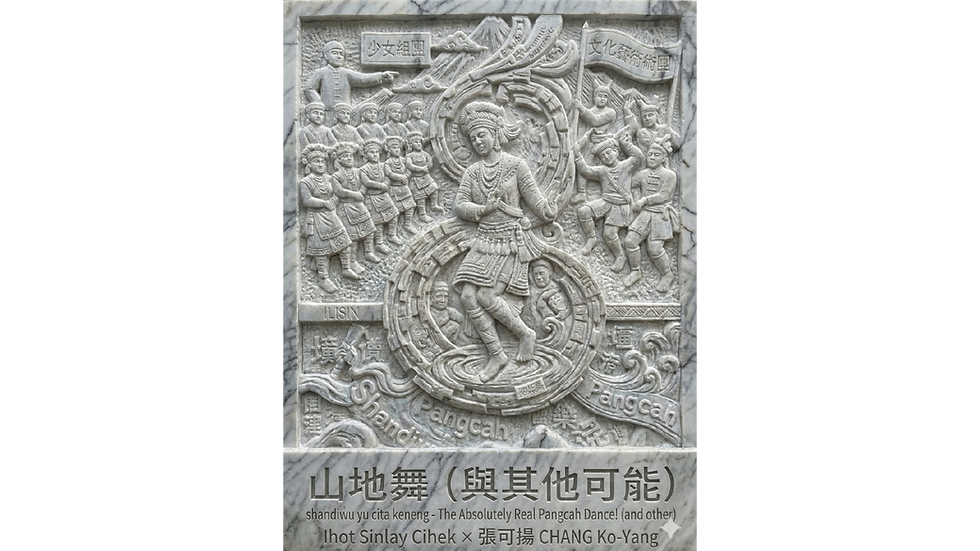
作為一個不太會跳舞的邦查身體,Ihot從小到大被塞去跳「少女隊」──年祭(Ilisin)時的年輕女子舞蹈表演,往往以她的懶惰與失敗告終。年祭時,都是那個全家唯一一個沒有下去跳舞的女生,在場邊幫表姊妹鼓掌尖叫。而跳舞老師最常叮嚀大家的都是:「腳踩穩!腳踩穩!用力踩!」
但,她的腳永遠踩不穩。
又或是,這種在阿美族部落或各式活動出現,由「文化藝術團」創作的舞蹈,是Ihot接觸阿美族文化與部落的少數機會。但這樣的舞蹈卻又被詬病為「被馴化」、「不夠傳統」、「沒有靈魂」。
那Ihot還能跳什麼舞呢?
語言沉沒之海,(但)身體尚未抵達。「被馴化」的舞蹈雖不如祭儀舞蹈神聖,但它有其獨特的生命力。這樣的舞蹈史觀,也與原住民歷史的文字化相應對讀。原住民的歷史從口傳到書寫,以及舞蹈經過日本及國民黨時期的規整化,皆是被打撈、整理後的樣貌。
還有什麼在海底?
As a Pangcah body not particularly gifted at dancing, Ihot was thrust into the “Young Girls’ Troupe” during Ilisin (Harvest Festival) throughout her upbringing—an experience that invariably ended in her own lethargy and “failure.” During Ilisin, she was always the only girl in the family who didn’t join the dance, staying on the sidelines to cheer and scream for her cousins. The dance instructors’ most frequent command was always: “Steady your feet! Step firmly! Step hard!”
But her feet could never stay steady.
These dances, created by “cultural and arts troupes” and performed across Pangcah villages and events, were among Ihot’s few opportunities to connect with her culture. Yet such performances are often criticized as “domesticated,” “untraditional,” or “soulless.”
If so, what dance is left for Ihot?
In the sea where language has sunk, the body has yet to arrive. While “domesticated” dances, created by “cultural and arts troupes” and performed across Pangcah villages and events, may not carry the same sacredness as ritual dances, they hold a unique vitality of their own.This perspective on dance history echoes the textualization of Indigenous history. From oral traditions to written records, and from ritual movements to the standardized forms shaped during the Japanese and KMT eras, what we see today are histories that have been retrieved and reshaped.
What else remains on the seabed?

Ihot Sinlay Cihek × 張可揚
Ihot Sinlay Cihek × CHANG Ko-Yang
Ihot Sinlay Cihek,花蓮阿美族人,根源於太巴塱及壽豐部落。表演藝術創作者,目前游移
於花蓮與台北兩地,探索各種表演的可能性,興趣為身份政治、性別理論及表演哲學。
張可揚,新北樹林人。臺灣獨立-編舞家,集結「可揚與他的快樂夥伴」一起平等而愉悅地演出/批判社會現象,信仰「人人皆可動,人人皆自由」。2021年開始以「舞蹈口述影像」及「非視覺舞蹈」實踐著更多元身體與感官參與舞蹈的方式。
Ihot Sinlay Cihek is a Pangcah (Amis) artist from Hualien, Taiwan, with roots in the Tafalong and Shoufeng communities. As a performance artist, she currently moves between Hualien and Taipei, exploring diverse possibilities within performance. Her research and creative interests include identity politics, gender theory, and decolonial practice.
CHANG Ko-Yang is an independent choreographer from Shulin, New Taipei City, Taiwan. As the founder of the collective Happy Cola’s Friends, he creates works that engage with and reflect on social phenomena through an equal and joyful approach. He believes in the idea that “everyone can move, and everyone is free.” Since 2021, CHANG has developed practices in “dance audio description” and “non-visual dance”, exploring more inclusive ways for diverse bodies and senses to participate in dance.


文本/表演者:Ihot Sinlay Cihek
編舞/表演者:張可揚
行政協力:簡郁庭
節目內容特別聲明:
演出過程中使用阿美族語。
Features the use of the Pangcah (Amis) language.
Text / Performer: Ihot Sinlay Cihek
Choreography / Performer: CHANG Ko-Yang
Production Coordinator: CHIEN Yu-Ting
